















Strapping and Taping in Gladstone
Strapping and taping: support, rehabilitation and aftercare
Outline

Introduction
PhysioCall provides strapping and taping assessments at 25 Philip Street, South Gladstone. Tape may be considered for an injury, sport or rehabilitation goal after your physiotherapist checks your symptoms, movement and skin.
The choice between rigid tape, elastic tape, a brace or another approach depends on your assessment. Ask how the proposed tape fits your rehabilitation plan, what to watch for and when to remove it. Check appointment times or call 07 4962 0411 to discuss an assessment.

What is Strapping and Taping?
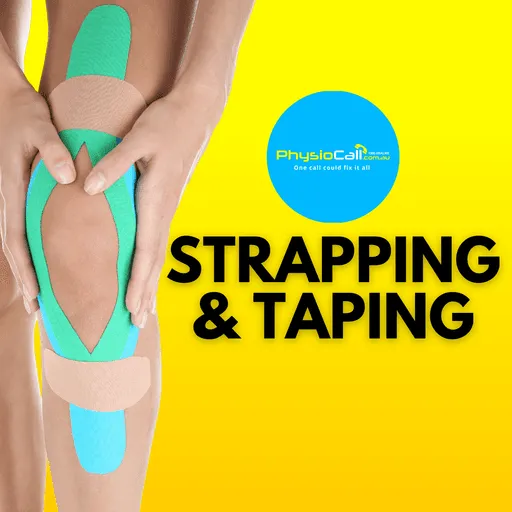
Strapping and taping use adhesive tape on the skin. The intended purpose should be clear before it is applied:
Support: restrict selected movements or provide a movement cue, depending on the tape and technique.
Symptoms: trial whether the tape helps your comfort during a particular activity.
Activity: discuss whether taping or a brace is suitable for your sport or task.
Rehabilitation: use it alongside an assessment and an exercise or activity plan.
There are different types of tape used depending on the purpose, including:
Rigid tape: less stretchy tape used when firmer movement restriction is intended.
Elastic kinesiology tape: stretchy tape that allows more movement; it is not interchangeable with rigid strapping.
Sports strapping: an application technique rather than a guarantee of injury protection. Ask which tape or brace suits your assessment.
Tape does not replace assessment of a new injury. Your physiotherapist can explain the intended benefit, alternatives and how progress will be reviewed.
Potential benefits and limits of taping
Results depend on the condition, tape and application. A 2020 evidence map found mixed-quality evidence across different musculoskeletal conditions. Useful questions include:
Purpose: what movement or symptom is the tape intended to address?
Response: does it help the activity you tested during your appointment?
Alternatives: would a brace, exercise or another approach be more appropriate?
Injury risk: ankle-support evidence cannot be applied to every sport, joint or injury.
Follow-up: when should the tape be removed and the plan reassessed?
How Physio Works in PhysioCall.com.au
STEP 1
Get out of pain

STEP 2
Rehabilitate your body

STEP 3
Stay out of pain

How PhysioCall.com.au Uses Strapping and Taping
Your physiotherapist can assess whether strapping or taping is appropriate, discuss options and check your response. Evidence differs by condition: a 2026 review of acute ankle sprains found short-term benefits from elastic taping, with low to moderate certainty and substantial variation between studies. It does not establish lasting recovery or prevention benefits for every injury.
When strapping and taping may be considered
People may ask about taping for the concerns below. Suitability and expected benefit need to be assessed for the particular injury or symptom:
Sports Injuries
Sprains and strains: discuss the injury, intended support and an appropriate rehabilitation plan.
Tendon symptoms: ask whether tape changes comfort during an activity; it does not establish that the tendon has healed.
Repeated activity: discuss workload and recovery rather than relying on tape to prevent damage.
Joint Instability
Knee symptoms: a knee assessment can help determine whether taping is appropriate.
Ankle sprains: 2021 clinical guidelines support selected taping or bracing alongside progressive loading and rehabilitation; the choice depends on the injury and individual needs.
Shoulder symptoms: discuss assessment and suitable shoulder rehabilitation rather than assuming tape will stabilise every problem.
Other pain and movement concerns
Ask what evidence applies to your symptoms.
Back pain: discuss assessment and active management; tape is not a permanent correction of spinal alignment.
Foot pain: ask whether a taping trial is appropriate alongside foot assessment and rehabilitation.
Movement or posture: assess the activity that bothers you rather than assuming tape can correct all posture-related symptoms.
Other Services

GLAD (Osteo Knee and Hip Program)
GLA:D combines education and supervised exercise for people with hip or knee osteoarthritis. Read about the program and ask whether it suits you.

Get Out Of Pain Plan
Explore the Get Out Of Pain Plan and discuss your goals with a physiotherapist. Ask about current session options, fees and package terms.

Ground Up Therapy Program
Read about the Ground Up Therapy program and discuss your movement, strength and activity goals. Your physiotherapist can explain suitable options after assessment.
The PhysioCall.com.au 3-Step System for Strapping and Taping
Step 1: Assess your symptoms and options
Discuss the injury or activity that concerns you, your goals and any tape or adhesive reactions. Your physiotherapist can explain whether taping, hands-on therapy or another option is appropriate.
Hands On Therapy may include:
Massage or soft tissue techniques: discuss suitability and comfortable pressure.
Joint mobilisation or manipulation: discuss potential benefits, risks and alternatives; these techniques do not simply realign the body.
Exercise and movement advice: choose activities suited to your assessment and goals.
If tape is used, check the activity it is intended to help. Your physiotherapist can show you when to remove it and what changes should prompt advice.
Step 2: Build your rehabilitation plan
Rehabilitation may include exercises, activity changes and advice tailored to your goals. Tape can be one part of the plan when appropriate; progress should be reviewed rather than assumed.
We use a combination of:
Individual exercises: discuss suitable strength, balance or movement work and how to progress it.
Program options: ask whether Ground Up Therapy or another rehabilitation program suits your needs.
Agree on how you will judge progress and when the plan needs adjustment. For ongoing ankle instability, guidelines advise against using tape or a brace as the only approach to improving balance.
Step 3: Review progress and self-management
Review what has changed, which activities you can manage and whether further appointments are useful. Ongoing care should have a clear purpose; repeated taping or routine maintenance is not automatically needed.
Questions to ask before ongoing care
Appointments and fees: ask about current prices, package inclusions, expiry and cancellation terms before purchasing a plan.
Review and home care: ask what you can do independently and which symptoms or activity changes should prompt another assessment.
Return-to-activity decisions depend on your injury, symptoms and functional assessment. Tape alone does not guarantee that an activity is safe or prevent all future injuries.
Our Expert Team
Our experienced team at PhysioCall is dedicated to providing high-quality service and personalized care to each of our clients.

Joshua Iaquinto
Physio

Joshua Hughes
Physio
What to expect during your taping appointment
Initial Consultation
Discuss your symptoms, previous injuries, activities and goals.
Tell your physiotherapist about skin problems, adhesive allergies and previous tape reactions.
Treatment Sessions
Discuss the proposed tape, alternatives and intended benefit before application.
Check comfort and the movement or activity being assessed.
Agree on suitable exercises and activity advice, plus instructions for tape wear and removal.
Aftercare and review
Follow your clinician’s wear and removal instructions for the tape used. Remove it if it causes redness, itching or discomfort, and seek advice before applying it again.
For elastic tape, Royal Berkshire’s patient leaflet advises gentle removal close to the skin in the direction of hair growth. Ask for instructions suited to your own skin and application.
Ready to Start Your
Physio Journey?
Planning your next step
If you are considering sports strapping or taping in Gladstone, arrange an assessment to discuss your symptoms, activity and goals. Your physiotherapist can explain whether tape is suitable, how it fits rehabilitation and what alternatives may help. Confirm fees and any package terms before starting care.

Locations
PhysioCall.com.au
25 Philip Street, South Gladstone Queensland
4680, Australia

FAQs
How long does the tape stay on?
Wear time depends on the tape, application, skin and activity. Follow the instructions given for your own treatment and ask when to remove it. Remove tape if it causes redness, itching or discomfort; do not leave it on just because it still sticks.
Can I apply tape myself?
Ask your physiotherapist to show you whether self-application is suitable and how to do it. Follow the technique, tension and removal instructions provided. Do not reapply tape over irritated skin or continue after a reaction without advice.
Is strapping and taping painful?
Tell your physiotherapist if the tape or application feels uncomfortable. Adhesive can irritate skin. Remove tape that causes redness, itching or discomfort, and ask the clinic for advice; taping should not be described as risk-free.
Do I need a referral to book an appointment?
You can usually book a private physiotherapy appointment without a referral. Medicare, DVA, WorkCover or other funded arrangements may need a valid referral or approval. Call the clinic to confirm what is required for your appointment.
Can strapping and taping prevent injuries?
Some taping or bracing approaches can reduce the risk of certain ankle sprains, but this is not a guarantee for every injury or sport. The choice depends on your assessment and activity, and tape does not replace an appropriate rehabilitation or return-to-sport plan.
Visit PhysioCall at 25 Philip Street, South Gladstone. Book an assessment online or call 07 4962 0411 to ask about appointment availability, fees and referral requirements.
25 Philip Street, South Gladstone, QLD, 4680 Australia