















GLA:D® Program in Gladstone
Education and exercise for hip and knee osteoarthritis
Outline

Introduction
Looking for GLA:D® in Gladstone? PhysioCall at 25 Philip Street, South Gladstone can assess your hip or knee symptoms and discuss whether an education and exercise program fits your needs.
Book an assessment or call 07 4962 0411 to ask about current program availability, fees and appointment options.

What is the GLA:D® Program?
GLA:D® stands for Good Life with osteoArthritis: Denmark. Its approach combines information about your condition with exercise and a plan for managing everyday activities:
Education: understand your symptoms and discuss questions about care.
Exercise: work on suitable movements with guidance and feedback.
Self-management: agree on practical steps you can continue between appointments.
Suitability depends on your assessment, health and goals. GLA:D® is not a cure for osteoarthritis or a guarantee that surgery will be avoided. Discuss the expected benefit and other options before choosing a program.
Before you start: format, availability and fees
PhysioCall is listed in GLA:D® Australia’s clinic directory at 25 Philip Street, South Gladstone. Ask us about current session times, the clinician delivering your program and fees. The official program overview explains the standard format and certification requirements.
Who is the GLA:D® Program For?
Hip or knee osteoarthritis symptoms are a common reason to ask about GLA:D®. Your assessment should establish what is causing your symptoms and which care is appropriate:
Hip symptoms: discuss pain, stiffness and activities you find difficult.
Knee symptoms: explain what has changed in walking, stairs or other daily tasks.
New symptoms: seek an assessment rather than assuming every joint problem is osteoarthritis.
After surgery: ask whether GLA:D® or another rehabilitation option fits your surgeon’s advice and recovery stage.
Eligibility and Alternative Options
Tell your clinician about other health concerns and the support you need to participate. Useful points to discuss include:
Recent injuries, operations and other diagnoses affecting your movement.
Symptoms elsewhere in your body that may need a different approach.
Language, hearing or communication needs, including interpreter or accessible-information options.
GLA:D® Australia distinguishes clinical suitability from research-registry eligibility. Its registry focuses on clinically diagnosed hip or knee osteoarthritis; imaging is not required for that diagnosis. Registry exclusions do not automatically exclude someone from appropriate clinical care.
How Physiotherapy Works at
PhysioCall.com.au Gladstone
STEP 1
Assess your symptoms
and discuss treatment options to be pain free

STEP 2
Work on strength and movement
with a personalised rehabilitation plan
STEP 3
Prevent future issues by planning your own maintenance package

How Does the GLA:D® Program Work?
The standard program includes two education sessions and twelve supervised exercise sessions, usually over about six weeks. See the official program structure and confirm the clinic’s current timetable before enrolling.
1. Education Sessions
Bring your questions about osteoarthritis and treatment choices.
Discuss which activities matter most to you.
Ask how the information applies to your own plan.
2. Supervised Exercise Therapy
Discuss the exercises selected for your assessment and goals.
Ask for feedback on technique and an appropriate starting level.
Agree on how the exercises will be adjusted as your response is reviewed.
3. Self-Management Strategies
Ask for a clear plan for exercise and activity between sessions.
Discuss how you will continue or adapt the plan after the program.
Potential benefits and the evidence
Pain and quality of life: an Australian program evaluation published in 2021 reported improvements after GLA:D® participation.
Study limits: this was an observational evaluation, not a randomised comparison. Only around half of participants provided follow-up questionnaires.
Daily function: agree on activities you want to track, such as walking or getting up from a chair.
Exercise progress: discuss your starting level and how changes will be reviewed.
Personal response: average study results do not predict exactly how one person will respond.
Treatment decisions: review symptoms and goals with your clinician; improvement does not guarantee a cure or remove the need for other care.
Ready to Start Your Physio treatment in Gladstone?
Symptoms and other rehabilitation needs
A program decision should follow assessment. Explain your current concerns and ask which approach fits them:
Hip or knee osteoarthritis: discuss the tasks affected by your symptoms and the options available.
Other joint pain: ask whether a different assessment or treatment plan is needed.
Post-operative rehabilitation: coordinate exercise with your recovery instructions rather than assuming the same program suits every operation.
Programs
For hip or knee osteoarthritis, ask the clinic about its current exercise program options, assessment requirements and suitability. Confirm what the GLA:D program involves and whether it is appropriate for your diagnosis and goals.

The Get Out Of Pain Plan offers five physiotherapy sessions at a fixed price with a discount. Ask about the current price, appointment coverage and validity period before purchasing, and whether the plan suits your assessment and goals.
Ground Up Therapy develops the foundations for rehab, training, work, sport, music, singing and everyday movement. Upper Limb: 6 sessions for $660. Lower Limb: 8 sessions for $880. Both work out to $110 per session, including the initial appointment, with the equipment you need included. No expiry; two-payment options available. Cannot be used with GOOPP or GOOPP+.
Muscle & Bone Rehab
Muscle & Bone Rehab focuses on rehabilitation, movement and strength. A plan should reflect your assessment, goals and relevant medical advice. Ask about suitable exercises, progress reviews and expected appointment costs.
What to Expect During the GLA:D® Program
Initial Assessment
Your initial appointment is an opportunity to:
Discuss your symptoms, health history and relevant medical advice.
Identify the daily activities and goals that matter to you.
Agree on how to review progress, fees and the next step.
Progression
Discuss how exercise difficulty will be adjusted in response to your symptoms and progress.
Ask when to report a change in symptoms and when your plan should be reviewed.
GLA:D® and other treatment options
Comparison with Surgery
Exercise-based care and a surgical opinion can both have a place in managing osteoarthritis. NICE guidance recommends considering joint replacement when symptoms substantially affect quality of life and non-surgical care is ineffective or unsuitable. GLA:D® does not guarantee that surgery will be avoided.
Comparison with Medication
Medicines may help manage symptoms alongside exercise when appropriate. Discuss options with your prescribing clinician; enrolling in GLA:D® is not a reason to stop prescribed medication. Exercise does not reverse every underlying joint change.
Comparison with General Exercise
GLA:D® offers a structured program, but another tailored exercise plan may also suit your needs. Compare supervision, accessibility, goals, costs and the support available with your clinician before deciding.

Goals to discuss at your assessment
Everyday activity: which tasks would you like to manage more comfortably?
Walking and stairs: what distance or activity is important to you?
Work and hobbies: what needs adapting while you build your plan?
After an operation: which recovery instructions should guide your exercises?
Tracking change: how will you and your clinician judge whether the plan is helping?

Planning exercise safely
When you may need different care
Discuss symptoms and medical advice before starting or changing your exercise plan. In particular:
New injury, a hot swollen joint or rapidly worsening symptoms may need assessment before routine exercise.
Tell your clinician about health conditions, recent surgery or advice that affects the activity you can do.
Potential Side Effects
Some discomfort can occur when starting exercise. NICE advises that joint pain may initially increase; ask how to monitor your response.
Ask what level of discomfort is acceptable for you and when to reduce exercise or seek advice. Do not assume every new symptom is ordinary soreness.
Ask your physiotherapist to explain the proposed exercises, suitable alternatives and how to report concerns. Supervision and an individual plan do not make every exercise risk-free.
Our Expert Team
Our team at PhysioCall.com.au provides physiotherapy care in Gladstone. You can usually book a private appointment without a doctor’s referral. Funded or insurance arrangements may need a valid referral or approval. Please confirm fees, eligibility and required documents with the clinic before your visit. Use online booking to check available appointment times.

Joshua Iaquinto
Gladstone Physiotherapist
16+ years

Joshua Hughes
Gladstone Physio
3+ years
Your next step in Gladstone
Arrange an assessment at PhysioCall, 25 Philip Street, South Gladstone, to discuss your hip or knee symptoms and goals. Confirm current GLA:D® availability, clinician arrangements, fees and the session format. Check appointment times or call 07 4962 0411 before choosing your next step.

Locations
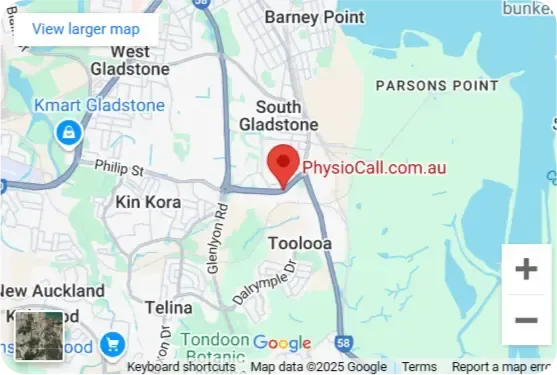
25 Philip Street, South Gladstone Queensland 4680, Australia
FAQs
How long does the GLA:D® Program take?
The standard format has twelve supervised exercise sessions, usually over six weeks, plus two education sessions. Ask the clinic for the current timetable, start dates and how missed sessions or follow-up appointments are handled.
Can I do the GLA:D® Program if I’m not an athlete?
You do not need to be an athlete to discuss GLA:D®. Your clinician should assess your symptoms, health, activity level and goals before recommending a program or another option. Ask about any adjustments or support you may need.
Is the GLA:D® Program painful?
Exercise can cause some discomfort, especially when starting. Discuss what response is acceptable for you and how to monitor it. Report symptoms that concern you so the exercises can be reviewed rather than assuming the program should always be pain-free.
Can the GLA:D® Program prevent surgery?
Some people find exercise-based care helps them manage symptoms and daily activities, but GLA:D® cannot guarantee that surgery will be avoided. Decisions about joint replacement should reflect your symptoms, function, treatment response and a discussion with your treating clinicians.
Do I need a referral to start the GLA:D® Program?
You can usually book a private physiotherapy assessment without a referral. Medicare and other funded arrangements may require a valid referral or approval. Confirm the fees, program availability and documents needed with the clinic before booking.
Have a question about GLA:D® in Gladstone? Call PhysioCall on 07 4962 0411 or book an assessment online to discuss suitability and current appointment options.
25 Philip Street, South Gladstone, QLD, 4680 Australia